
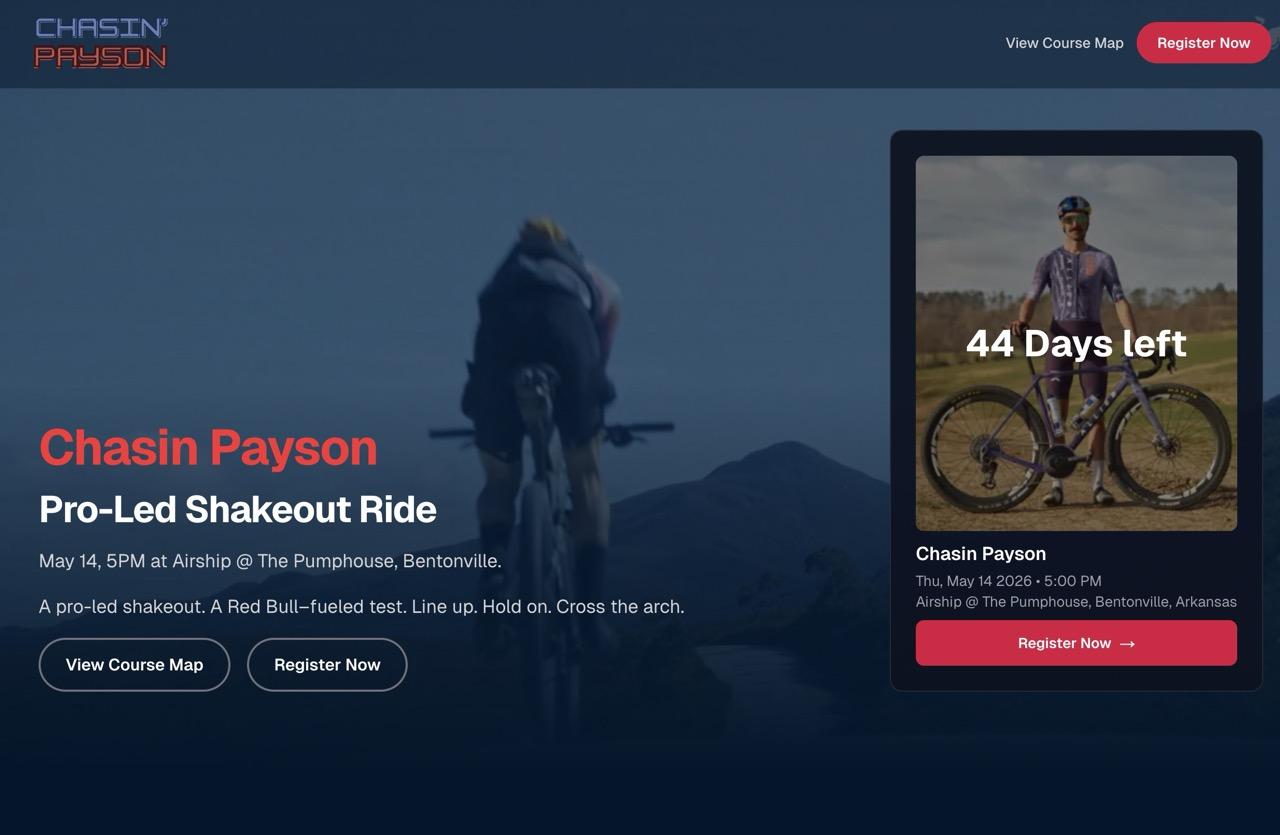
Why We Built chasinpayson.com (and Why It Matters)
Most event pages live buried inside a larger website.
They compete with navigation menus, service pages, blog posts, and everything else the business is trying to say. The result is usually the same: a cluttered experience that asks users to think too much and act too little.
That is exactly why we chose to build chasinpayson.com as a standalone microsite.
Not because it is trendy.
Because it works.
What Is a Microsite?
A microsite is a focused, single-purpose website designed around one campaign, event, or idea.
It strips away everything unnecessary and answers one question:
What do we want the user to do?
For Chasin Payson, that answer was simple:
- Understand the event
- Feel the energy
- Register
No distractions.
The Problem With Traditional Event Pages
Let us be honest about how most event pages work.
They typically live inside a main site like:
ruleofthree.bike/events/chasin-payson- Or buried in a calendar or blog post
From there, users have to:
- Navigate through menus
- Parse long paragraphs
- Figure out what is important
- Find the registration link
Every extra step creates friction.
And friction kills conversions.
Why We Built chasinpayson.com
Chasin Payson is not just another event.
It is:
- A Red Bull athlete activation
- The kickoff moment for Rule of Three Week
- A high-energy, community-driven ride
It needed its own stage.
So we built a microsite that feels like the event itself.
One Page. One Flow. One Goal.
The microsite is designed as a guided experience:
Hook → Understand → Trust → Register
- A bold hero pulls you in
- A short explanation tells you what it is
- A breakdown shows how it works
- A clear CTA drives you to register
There is no confusion about what to do next.
That clarity is the power of a microsite.
Designed Like a Trailer, Not a Brochure
Instead of treating the site like documentation, we treated it like a film.
- Short, punchy copy
- Cinematic pacing
- Visual hierarchy that builds momentum
- Embedded video to create emotion
The goal is not just to inform.
It is to make someone say:
"I want to be part of this."
Seamless Registration With Kikits
A microsite does not replace your infrastructure; it focuses it.
Behind the scenes, Chasin Payson uses Kikits to handle:
- Registration
- Digital waivers
- QR-based check-in
- Number plate validation
- Sponsor activations (like Red Bull drink redemption)
But the user never feels like they are bouncing between systems.
The microsite acts as the front door.
Kikits powers what happens next.
Why Not Just Use the Main Website?
Your main website has a different job.
It needs to:
- Explain your brand
- Showcase multiple offerings
- Serve different audiences
- Rank for SEO
A microsite does the opposite.
It:
- Focuses on one message
- Targets one audience
- Drives one action
- Moves fast
Trying to do both in the same place usually weakens both.
When You Should Use a Microsite
A microsite makes sense when:
- You are launching a major event or campaign
- You have a strong narrative or story to tell
- You need high conversion rates
- You are working with sponsors or partners
- You want something highly shareable
If people are going to be sending links around, it should lead somewhere intentional.
The Bigger Opportunity
Chasin Payson is just one example.
But the model scales.
This approach can be used for:
- Festivals
- Product launches
- Athlete activations
- Community campaigns
- Sponsored experiences
Instead of building pages, you build experiences.
Final Thought
Most websites try to say everything.
Microsites win because they say one thing really well.
Chasin Payson is not buried in a menu.
It has its own home.
Its own energy.
Its own flow.
And that is exactly why it works.