
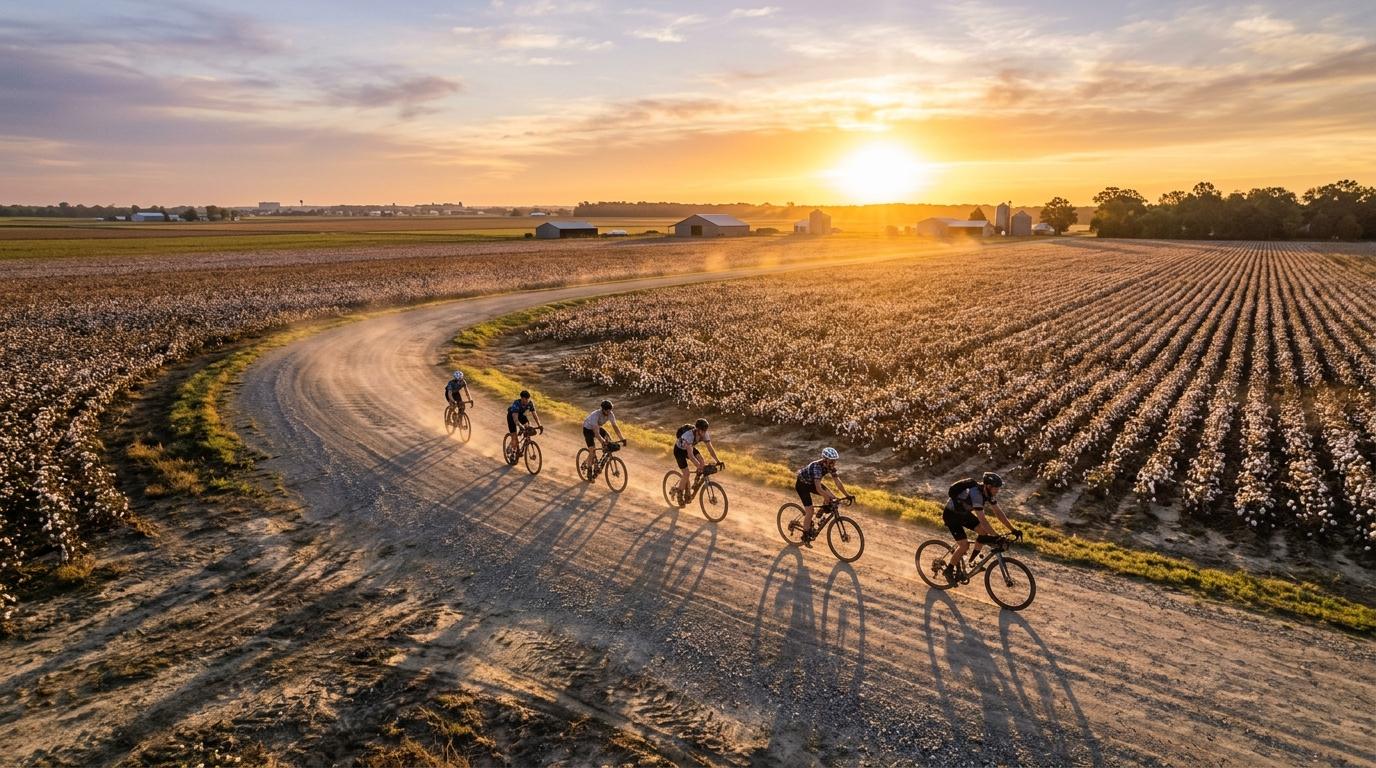
Seven Days Through the Delta
Arkansas Graveler is not a one-day ride.
It is a seven-day gravel experience that moves through the Delta in Arkansas, carrying riders across long roads, open fields, mud, towns, and the kind of landscape that gives an event its identity.
That mattered to us from the start.
When we created the promo video for Arkansas Graveler, the goal was not to make something that merely looked cinematic. The goal was to make something that felt like this ride.
The Creative Challenge
There are already plenty of cycling visuals in the world.
The problem is that most of them are generic.
They show riders, dirt, speed, dust, and effort, but they could belong to almost any race, in almost any place.
Arkansas Graveler needed something more specific:
- Real-world Arkansas locations
- A visual tone that matched the Delta
- Riders who felt believable in that world
- Kit and uniforms that felt true to the event
That is where AI became useful.
Not as a shortcut to fake spectacle, but as a way to create more specific, more controllable imagery around a real-world event.
Using AI in Real Places
For this project, we took AI cyclists and placed them into real-world locations across the Delta and surrounding Arkansas terrain.
That meant working from actual roads, actual landscapes, and imagery that reflects the places riders associate with the event.
We were not trying to create a fantasy version of gravel cycling.
We were trying to create something that feels grounded:
- Riders climbing
- Riders moving through open fields
- Mud on tires
- Winding backroads
- Small-town context
Those details are what make an event promo feel believable.
Real Locations, Not Generic Backdrops
One of the key decisions in this project was to treat Arkansas itself as part of the story.
These are not random scenic placeholders. The roads, fields, town context, and rural stretches are what make the ride feel like Arkansas Graveler instead of a generic gravel montage.
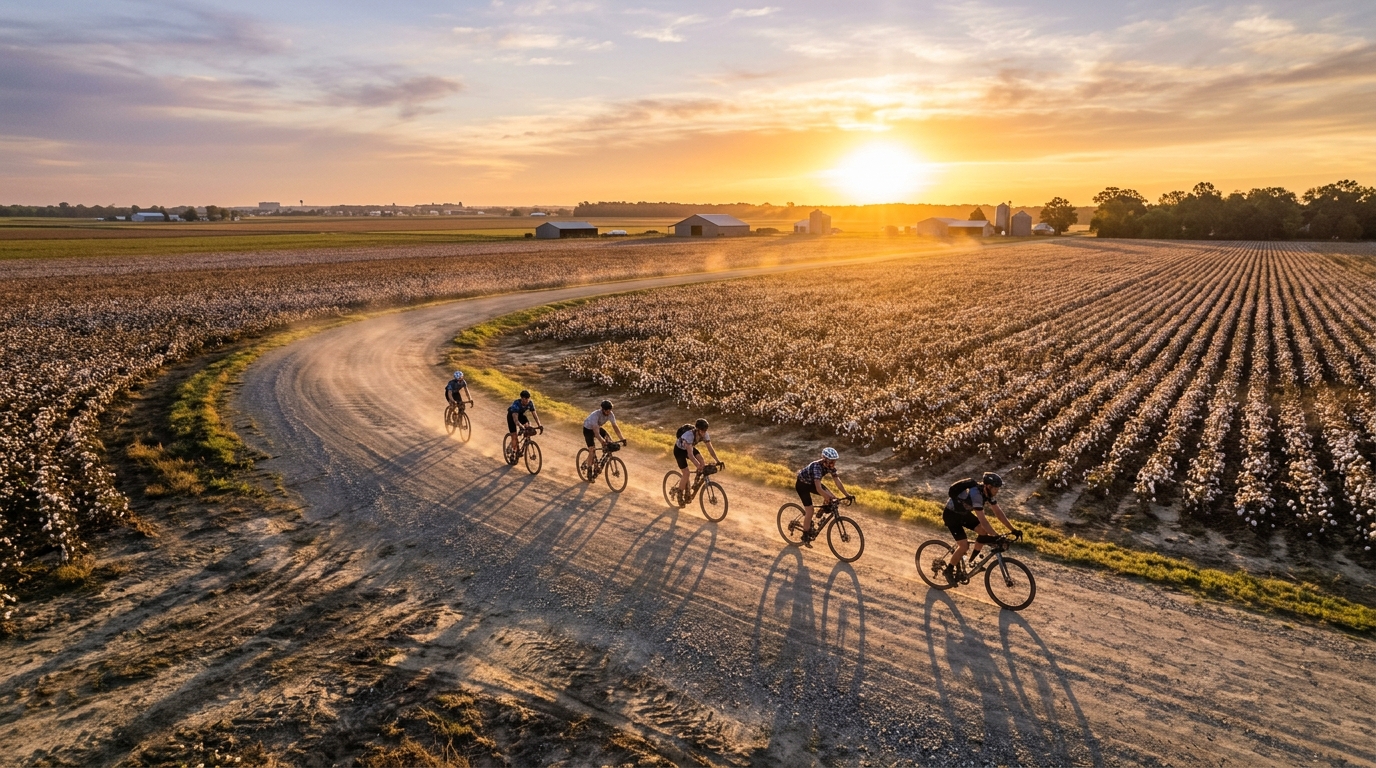
This frame captures the openness of the Delta. The landscape does a lot of the storytelling by itself: long sightlines, exposed riders, and the feeling that the route keeps unfolding far beyond the edge of the frame.
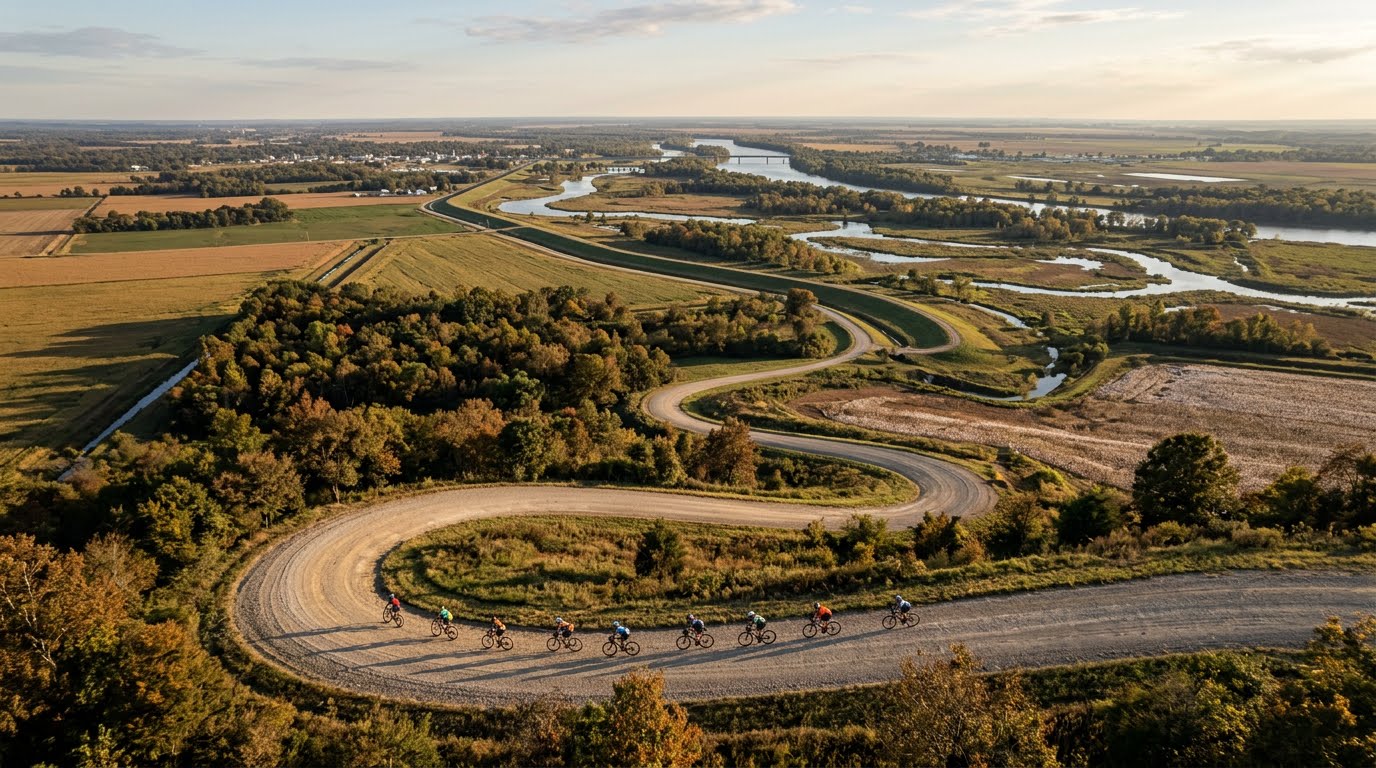
This road image helps establish motion and geography. It is the kind of real backroad context that gives the promo a sense of place instead of turning it into a studio-style cycling ad.
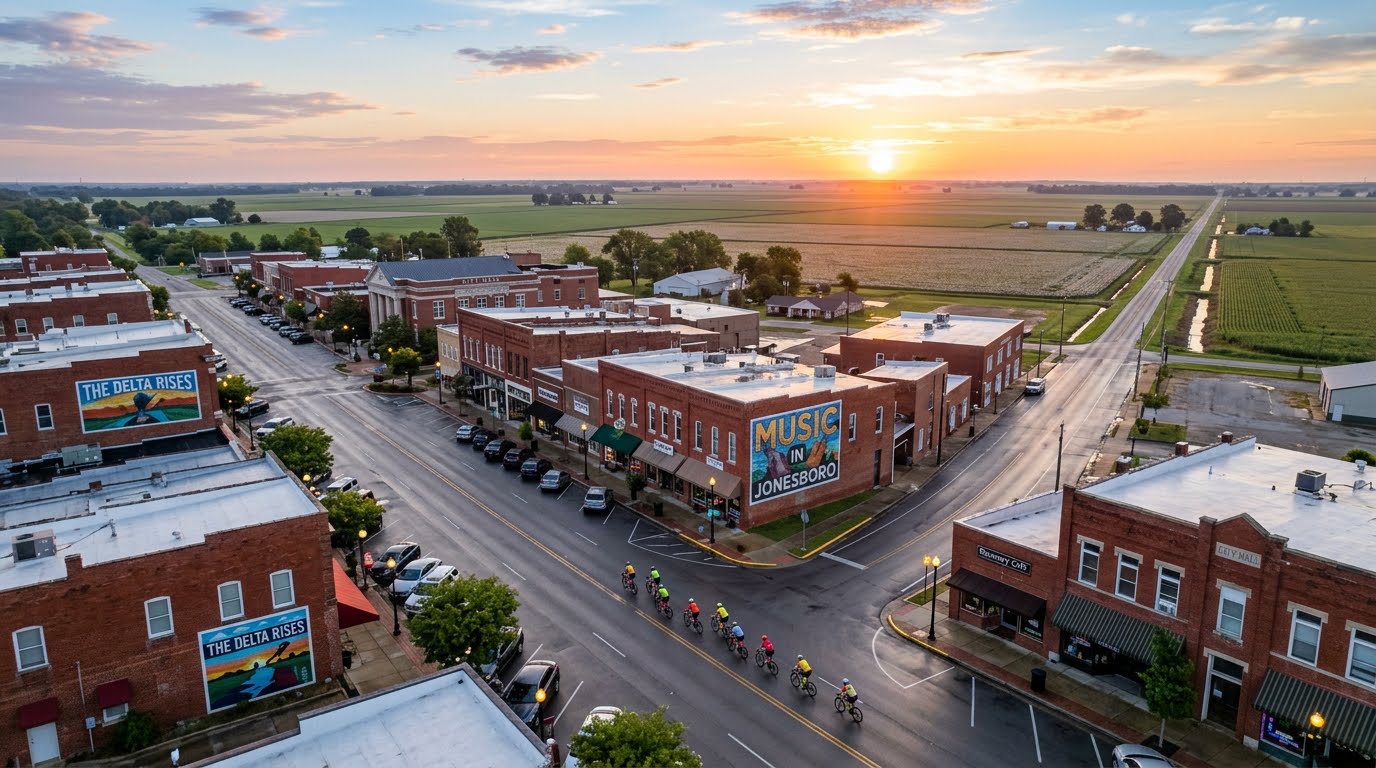
The town imagery matters too. Including recognizable real-world context helps the piece feel tied to actual communities along the route, not just abstract countryside.
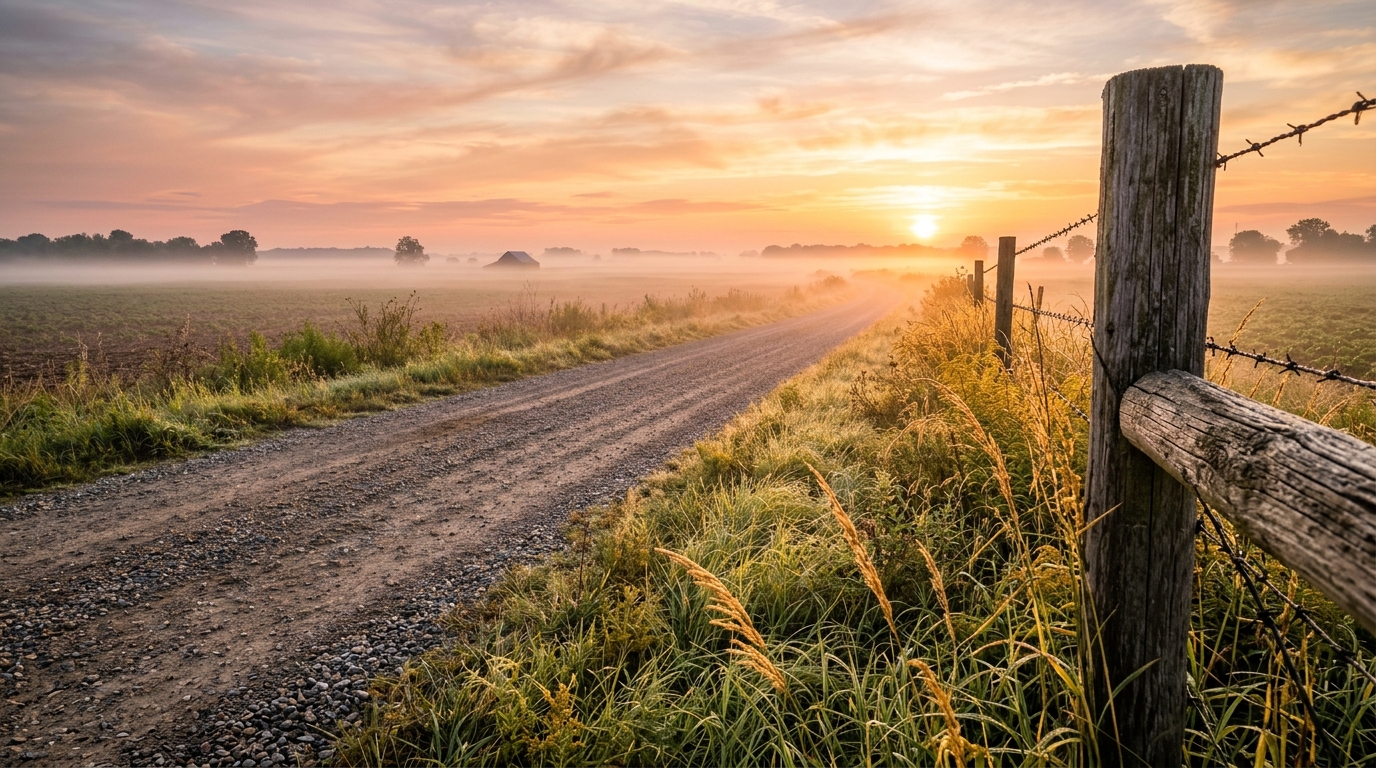
This is the kind of environmental plate that anchors the visual language of the project. Even before riders appear, the road itself tells you what kind of week this is going to be.
The Kit Matters
One of the most important parts of making AI imagery work is clothing.
If the wardrobe feels wrong, the entire image starts to feel artificial.
So part of the approach for Arkansas Graveler was making the cyclists look like people who might actually show up for the event. That means jerseys, layers, and cycling uniforms that feel connected to real gravel culture and to the kind of riders who participate in a ride like this.
This is a small detail, but it makes a huge difference.
Realism does not come from one dramatic hero frame. It comes from many small decisions being right at the same time.
Clothing Augmentation That Feels Native
Several of the rider images were pushed specifically through wardrobe and kit decisions.
That does not mean making the clothing louder. It means making it more believable. Jerseys, layers, color blocking, and race-style details were adjusted so the cyclists feel closer to what you might actually see during Arkansas Graveler.
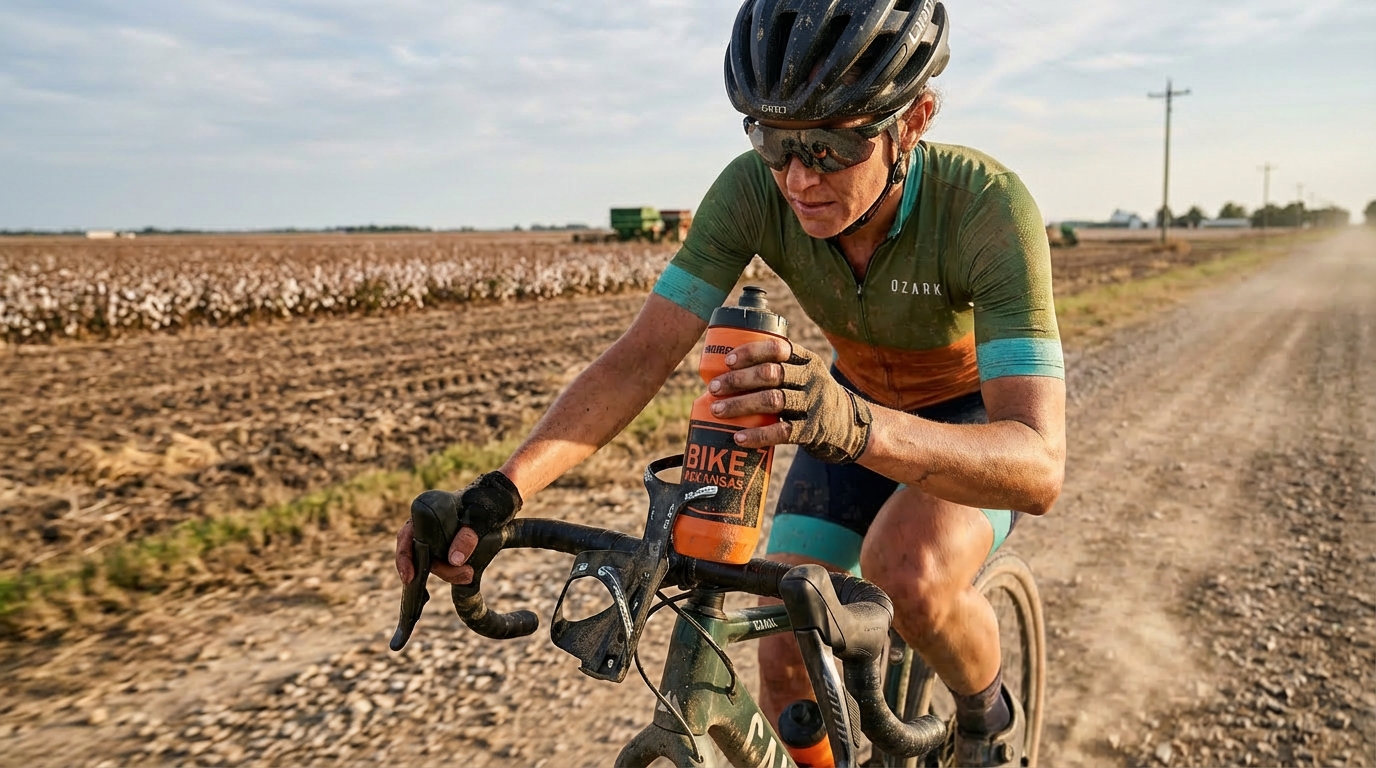
This is a strong example of clothing augmentation doing its job quietly. The rider feels integrated into the world because the kit supports the setting instead of fighting it.
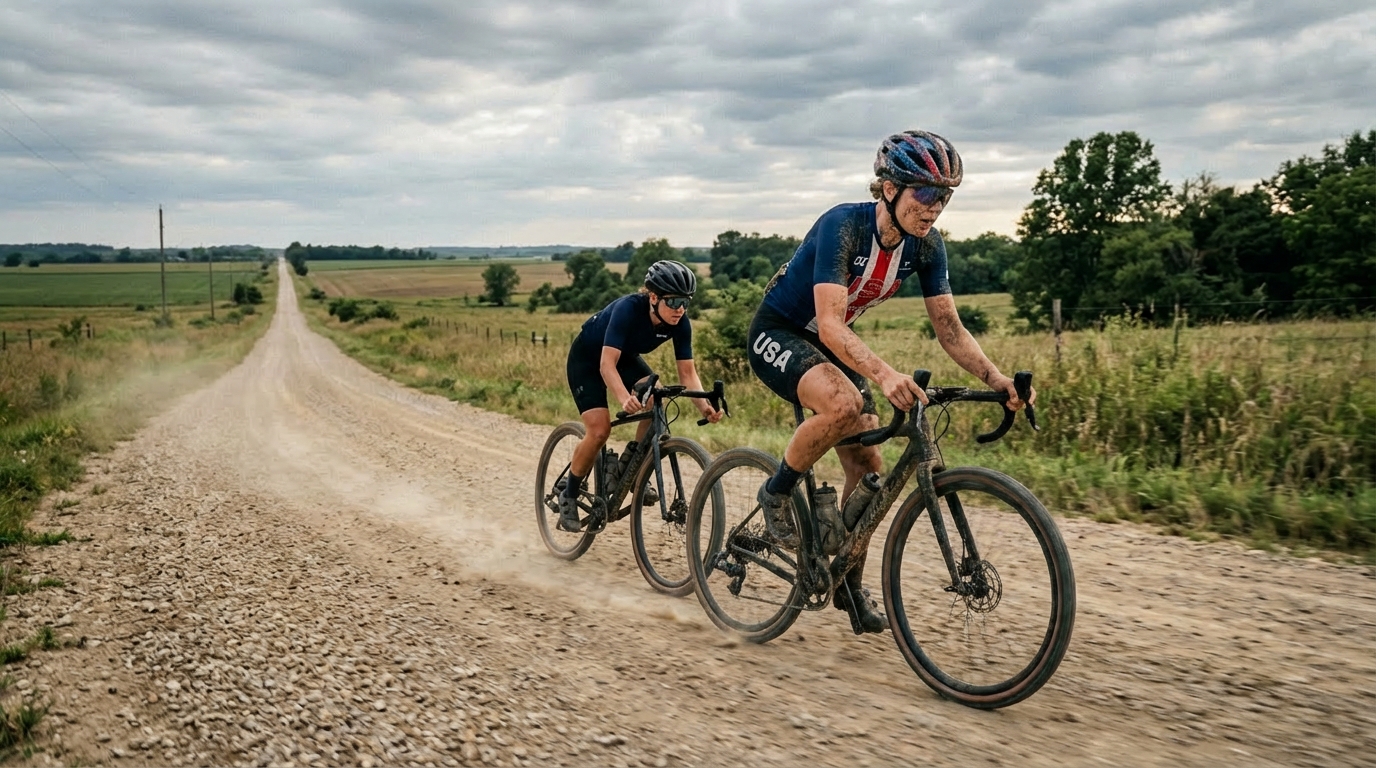
Here the wardrobe treatment helps create identity and cohesion. The clothing is part of what sells these riders as participants rather than placeholders.
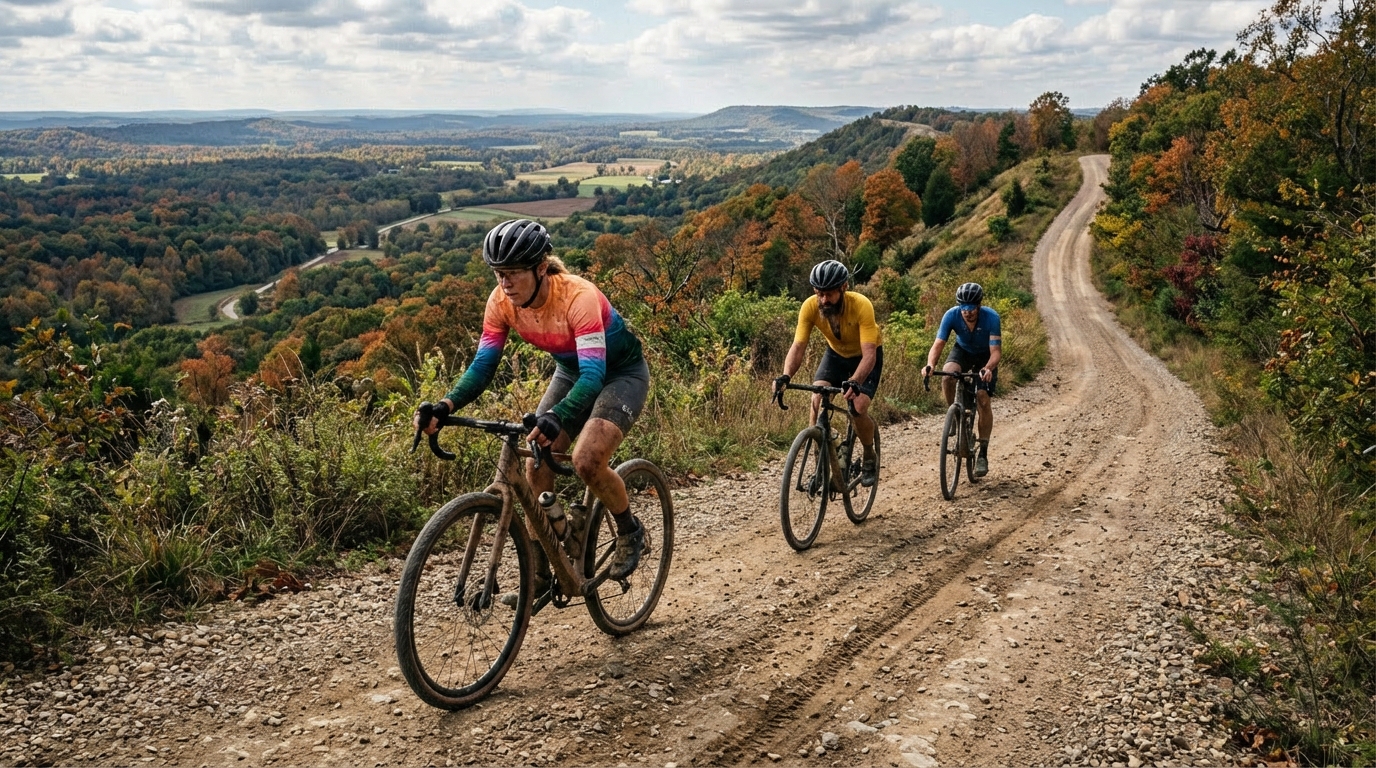
The uphill frame is less about fashion and more about function. The clothing needed to feel like something a real cyclist would wear while actually climbing, sweating, and moving through the route.
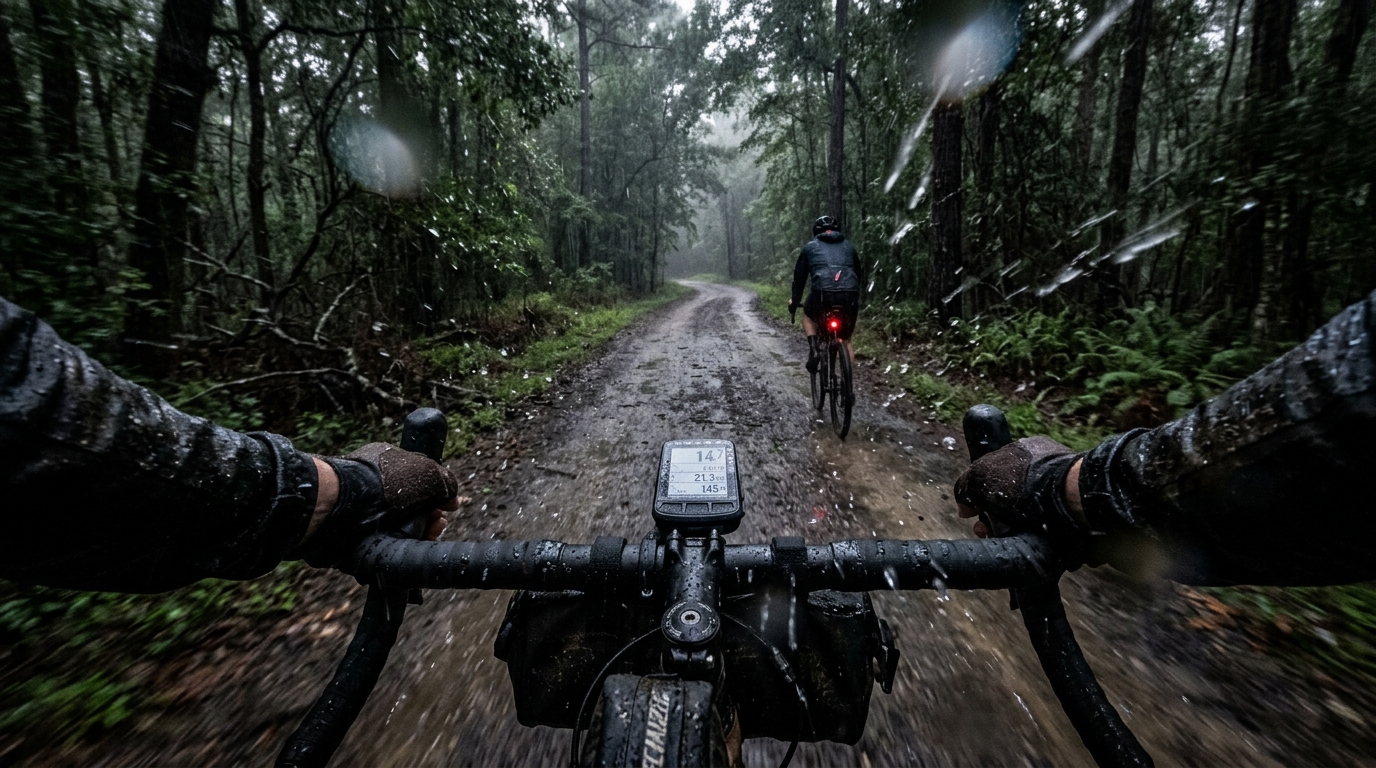
In dynamic shots like this one, styling still matters. Even with speed and mud carrying the frame, the rider presentation has to stay believable or the illusion breaks.
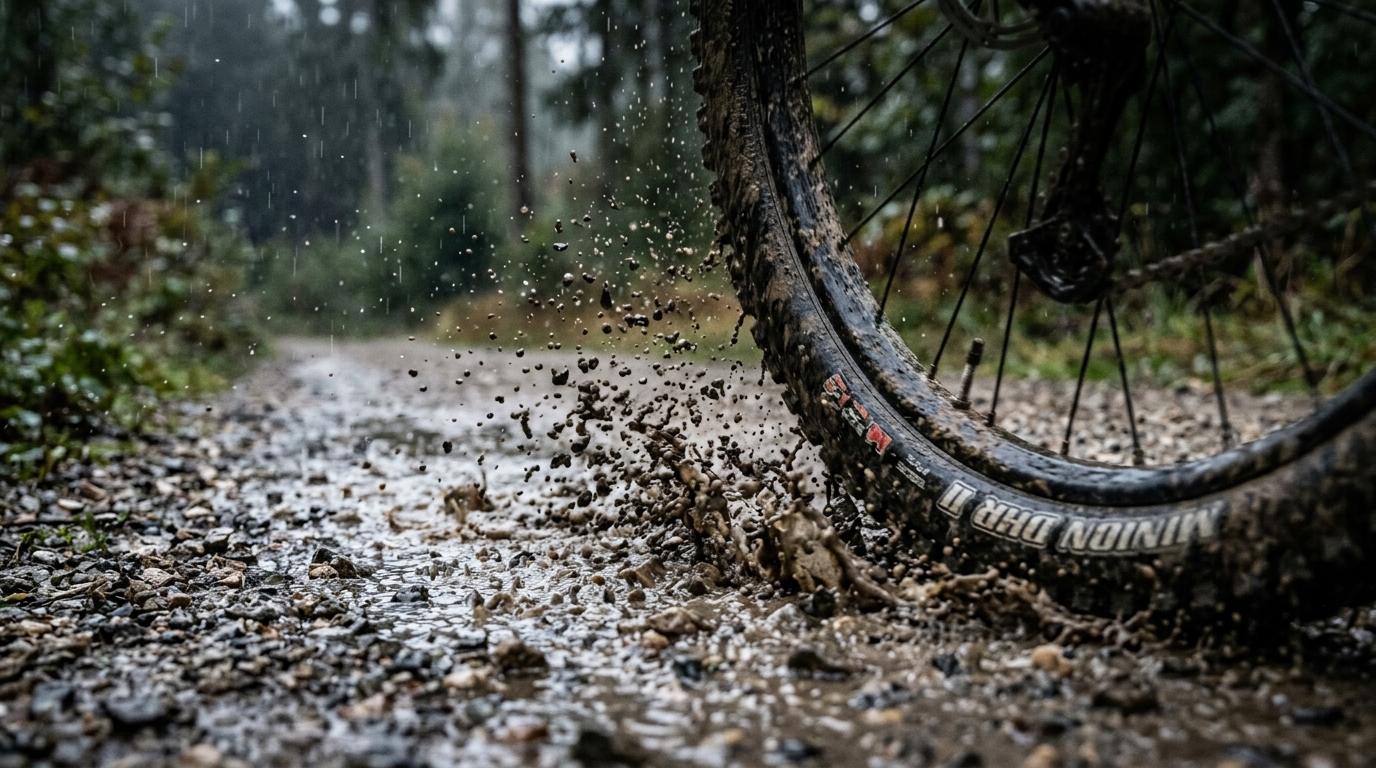
Close-up details like this are part of the realism strategy too. You do not just need believable riders. You need believable surfaces, conditions, and evidence of the ride.
Why This Matters
At Next Wave Agentic, we are interested in using AI to make creative work more effective, not less human.
That means asking a different question than:
"What can AI generate?"
Instead, we ask:
"How can AI help us create something that feels more true to the real world?"
For Arkansas Graveler, that meant:
- Keeping the geography recognizable
- Making the riders feel believable
- Matching the event tone
- Building visuals that support the identity of the ride
The result is not just "AI cycling content."
It is a promo piece built to help people imagine themselves inside the real event.
AI as a Realism Tool
There is a misconception that AI always pushes work toward something glossy, strange, or synthetic.
But when used carefully, AI can do the opposite.
It can help tighten the relationship between concept and execution. It can help explore iterations quickly. It can help shape riders, motion, wardrobe, and composition in ways that would normally take much longer to produce.
The important part is restraint.
You do not use AI to replace reality. You use it to support a more convincing version of the story you are trying to tell.
That is what this project represents for us.
The Bigger Opportunity
Arkansas Graveler is a strong example of where this approach works well:
- Endurance events
- Destination rides
- Tourism campaigns
- Outdoor storytelling
- Athletic activations
Whenever a place matters, and whenever identity matters, the visuals need to feel specific.
AI becomes much more valuable when it is tied to a real landscape, a real community, and a real point of view.
Final Thought
The best AI creative work does not feel more artificial.
It feels more intentional.
For Arkansas Graveler, that meant taking riders generated with AI and grounding them in the roads, mud, fields, and atmosphere of the Arkansas Delta, then pushing the wardrobe and visual treatment until the result felt believable.
That is the direction we care about most:
Using AI to create work that feels closer to the real world, not farther from it.