
If you have experimented with AI tools, you have probably noticed a pattern:
You ask for something, and you get a piece of it.
A paragraph. An image. A caption.
But real work is not one piece. It is a connected set of deliverables that build on each other.
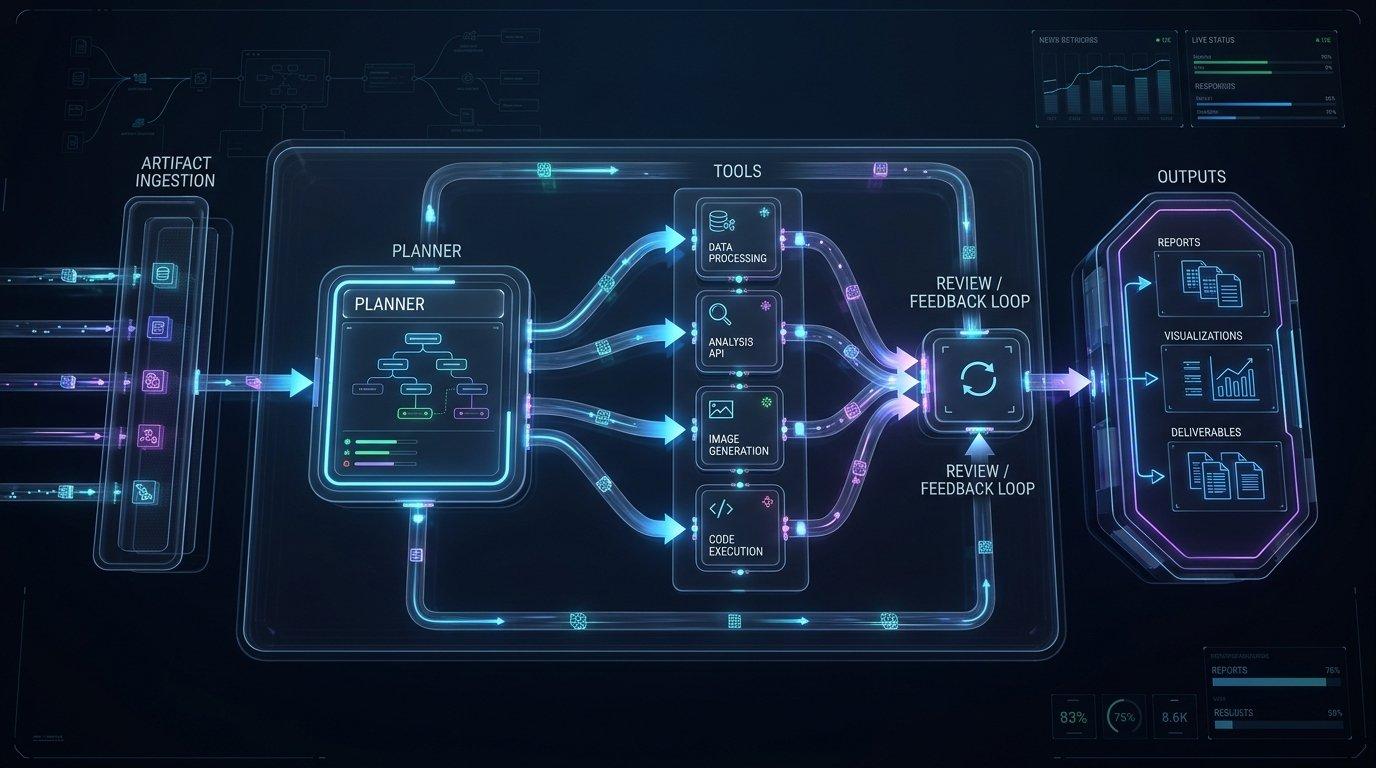
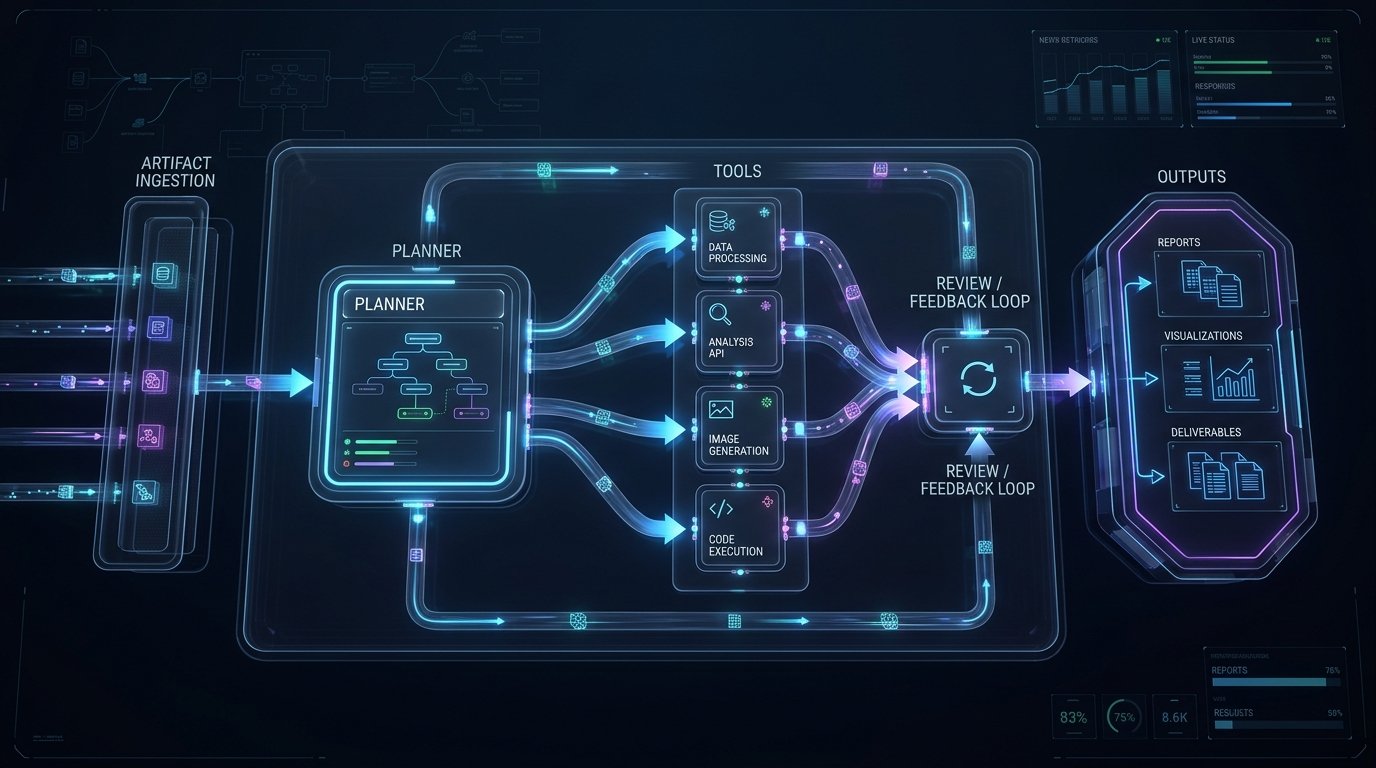
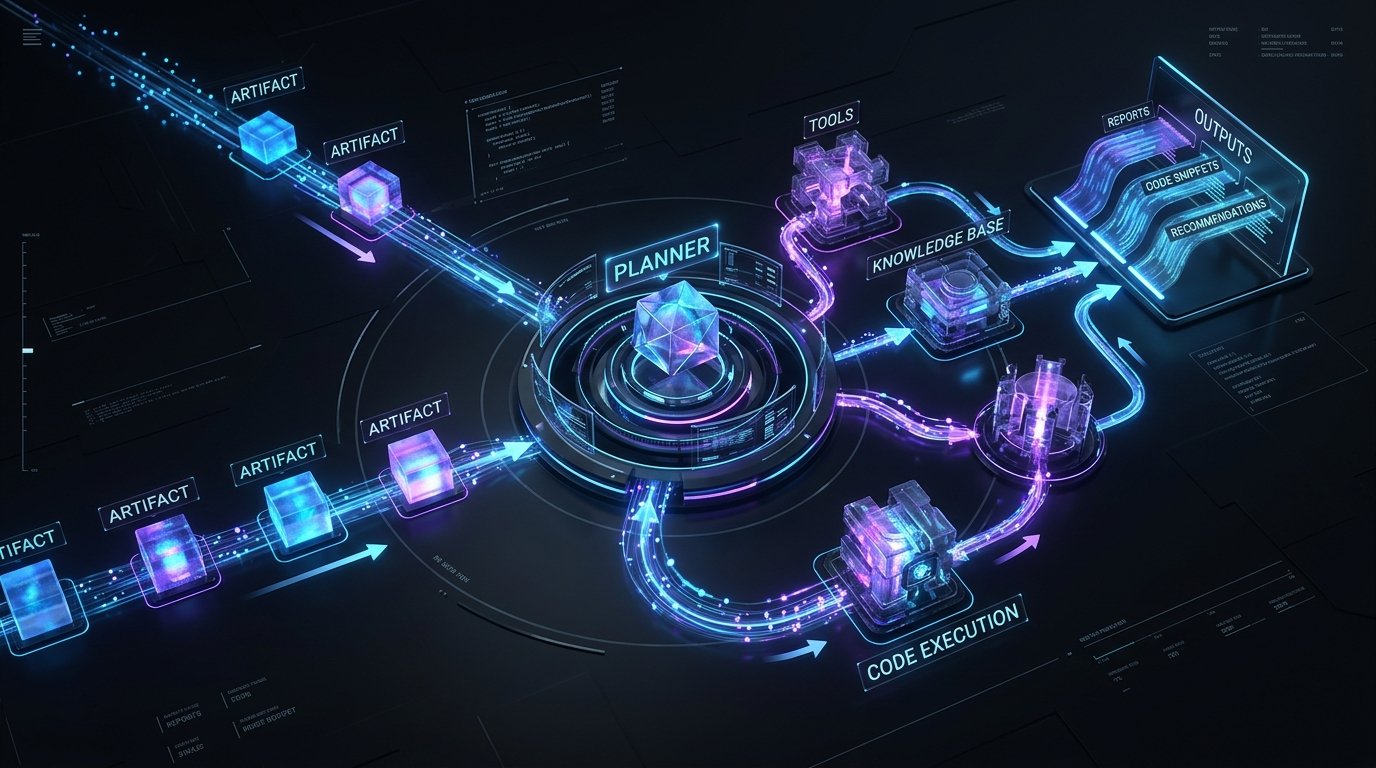
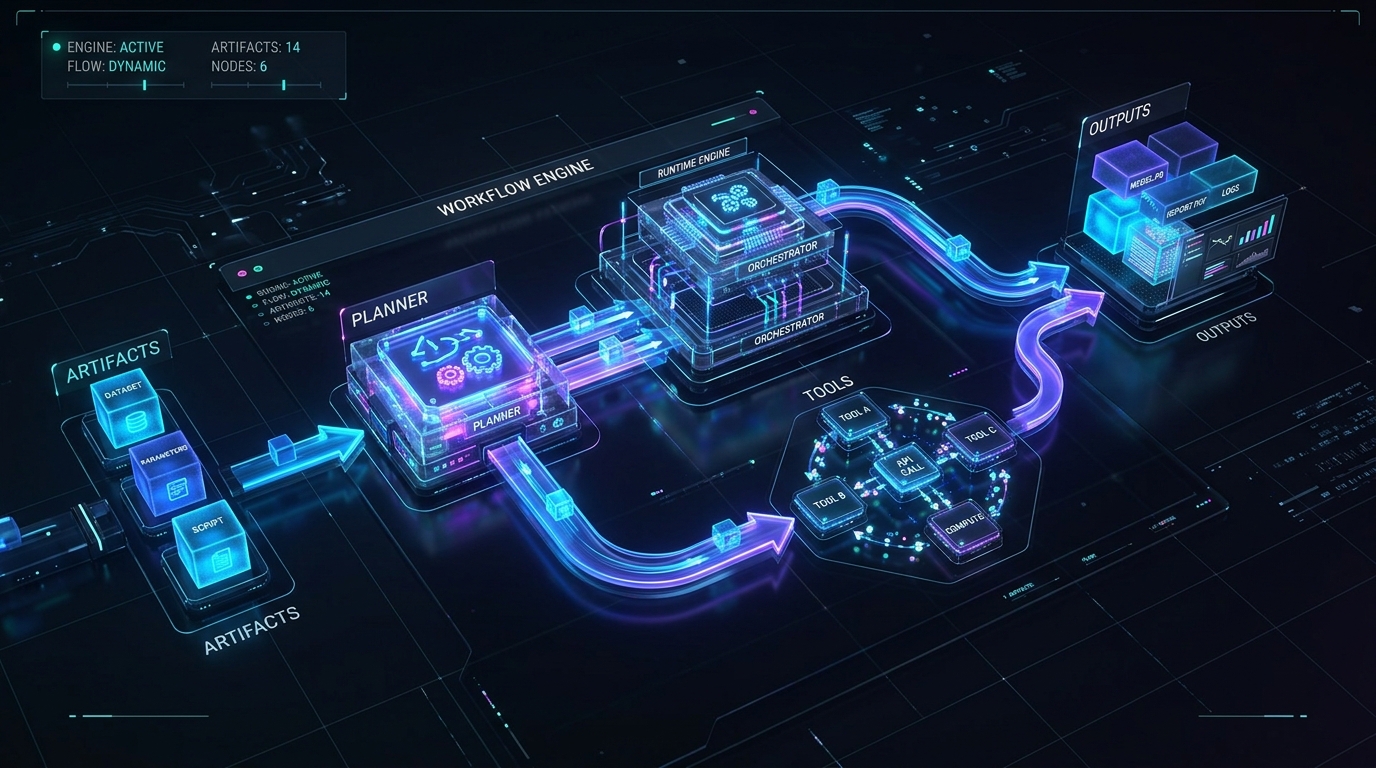
That is why we built what we call an Agentic Production Engine.
Under the hood, it is powered by a more technical system, but in practice it does something simple:
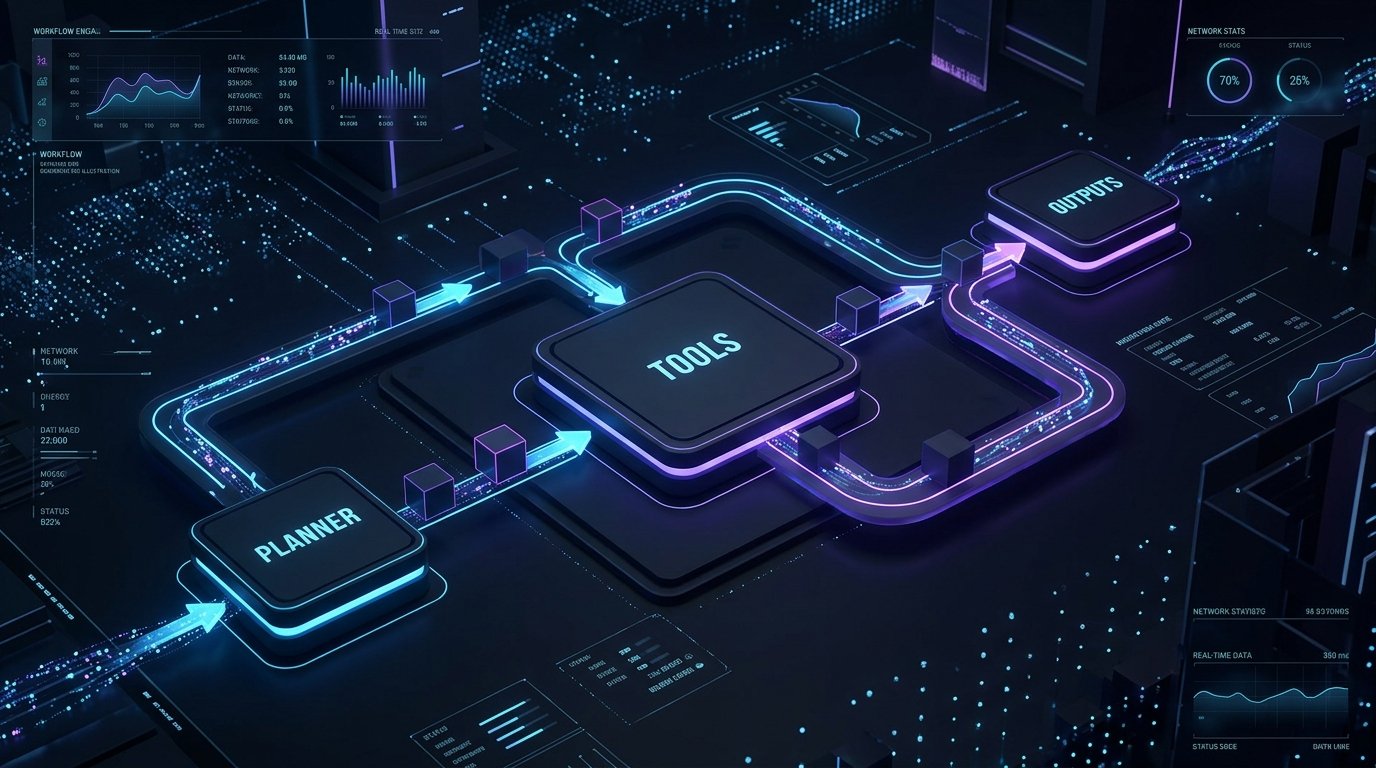
You give it a goal. It figures out what needs to be created, builds each piece step-by-step, and delivers a complete, organized result.
Let's Walk Through a Simple Example
Imagine a fictitious business:
Midnight Cartel
A high-end, members-only nightlife concierge app that curates VIP experiences.
Now you give the system this goal:
"Create a marketing campaign for Midnight Cartel."
What the Engine Does First
It does not immediately start writing.
It first asks:
"What would a complete campaign include?"
Without you specifying anything technical, it determines it likely needs:
- A campaign concept
- Brand positioning
- Image direction
- A blog post
- Social media content
How It Builds Step-by-Step
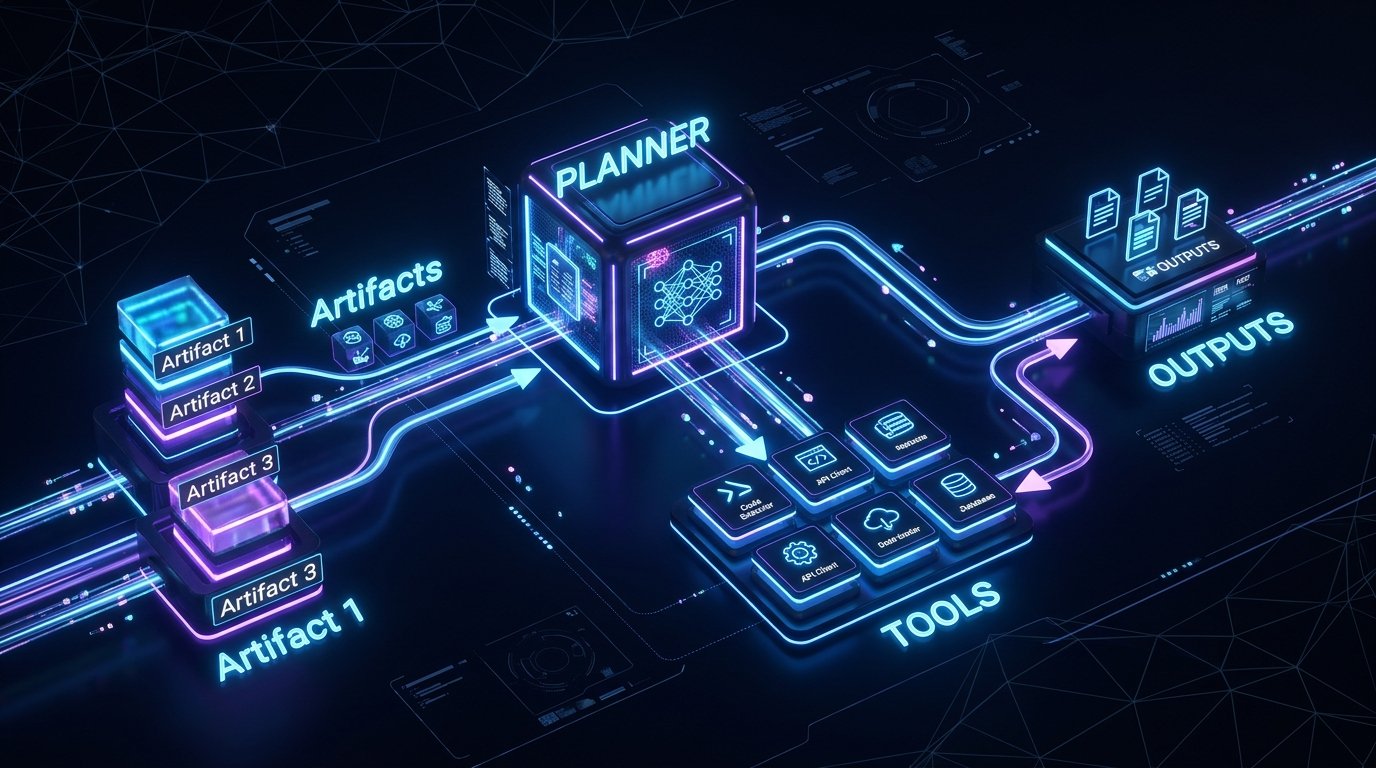
The engine does not generate everything at once.
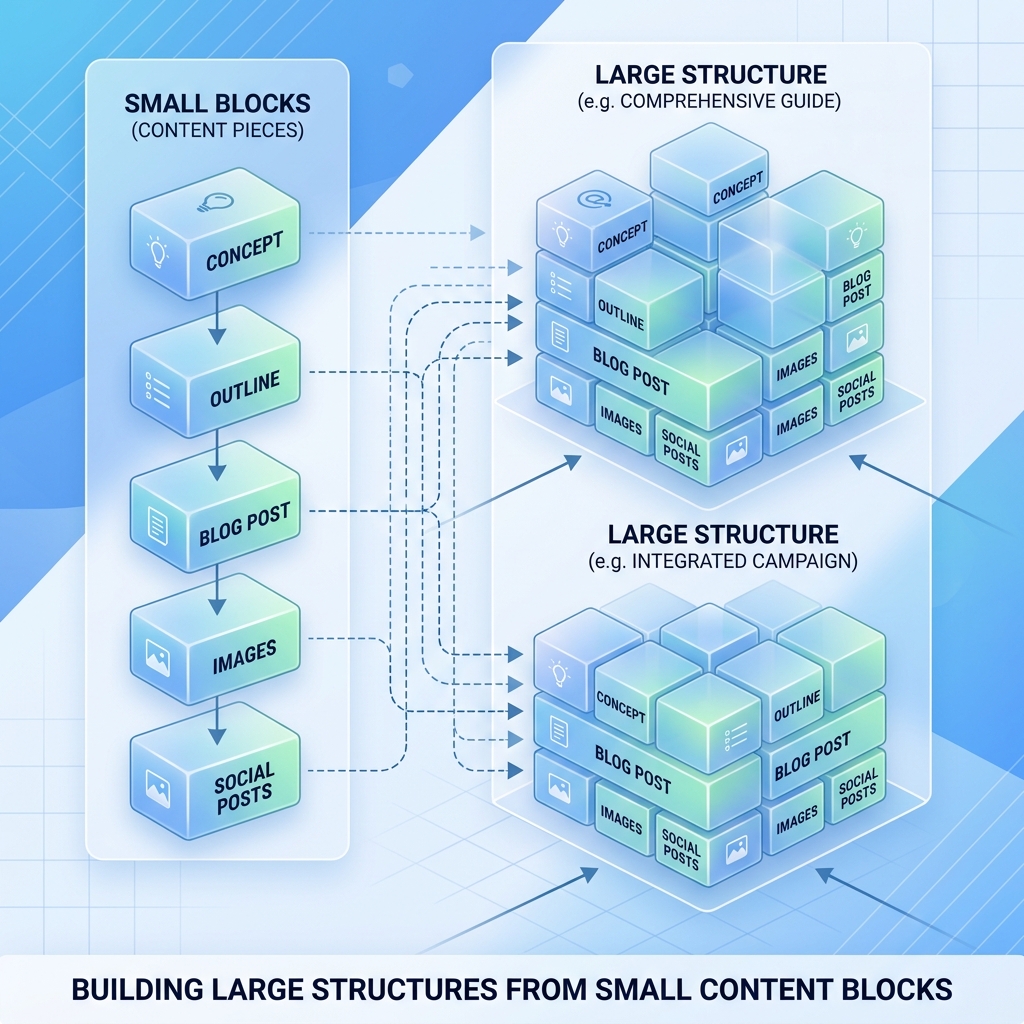
It builds smaller pieces first, then uses those results to power larger ones.
Step 1: Campaign Concept
It creates a foundational idea:
Midnight Cartel is not just nightlife. It is access.
This becomes the core theme.
Step 2: Brand Positioning
Using that concept, it defines:
- Tone: exclusive and mysterious
- Audience: young professionals with high income
- Messaging: access, status, and curated experiences
Now the system has direction, not just content.
Step 3: Visual Direction to Image Prompts
Before generating images, it decides what they should look like:
- Neon-lit rooftop bars
- Private lounges
- Blurred motion nightlife scenes
- VIP table aesthetics
These become structured image prompts.
Step 4: Generate Images
Now it creates:
- Hero campaign image
- Instagram-ready visuals
At this point, something important happens:
The system now has real visual assets, not just ideas.

Step 5: Write the Blog Using Everything Above
Now when it writes the blog post, it is not guessing.
It uses:
- The campaign concept
- The brand positioning
- The visual direction
- The actual images
So instead of:
"Midnight Cartel is a nightlife app..."
You get something like:
"The velvet rope is not a barrier, it is a filter. Midnight Cartel redefines nightlife by giving you access to the rooms you were never meant to find."
And the blog naturally references:
- The aesthetic
- The tone
- The experience shown in the images
The blog is stronger because it builds on everything created before it.
Step 6: Social Media Content
Now the system generates Instagram posts using:
- The blog content
- The images
- The brand voice
Each post aligns with the campaign instead of feeling random.
Why This Matters
Most AI tools treat each task like it is isolated:
- Generate image
- Generate blog
- Generate caption
No connection.
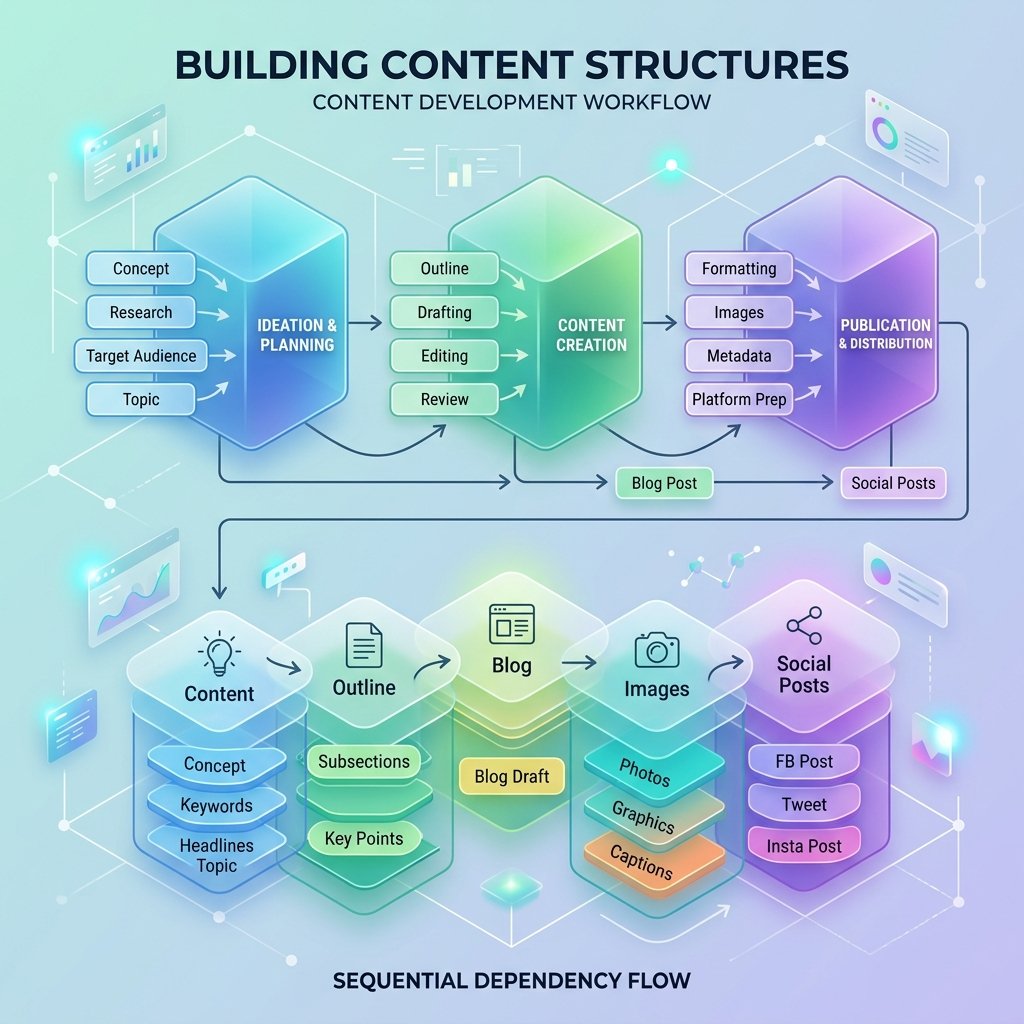
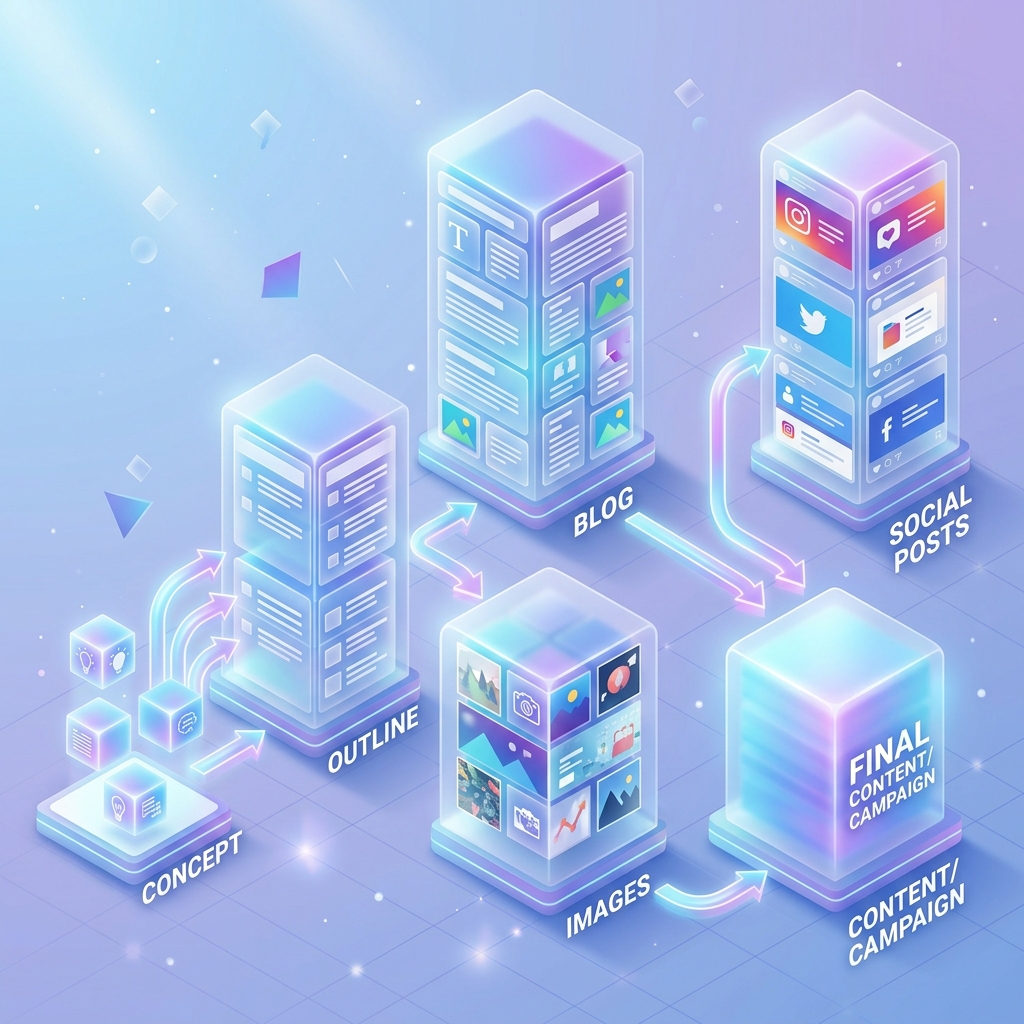
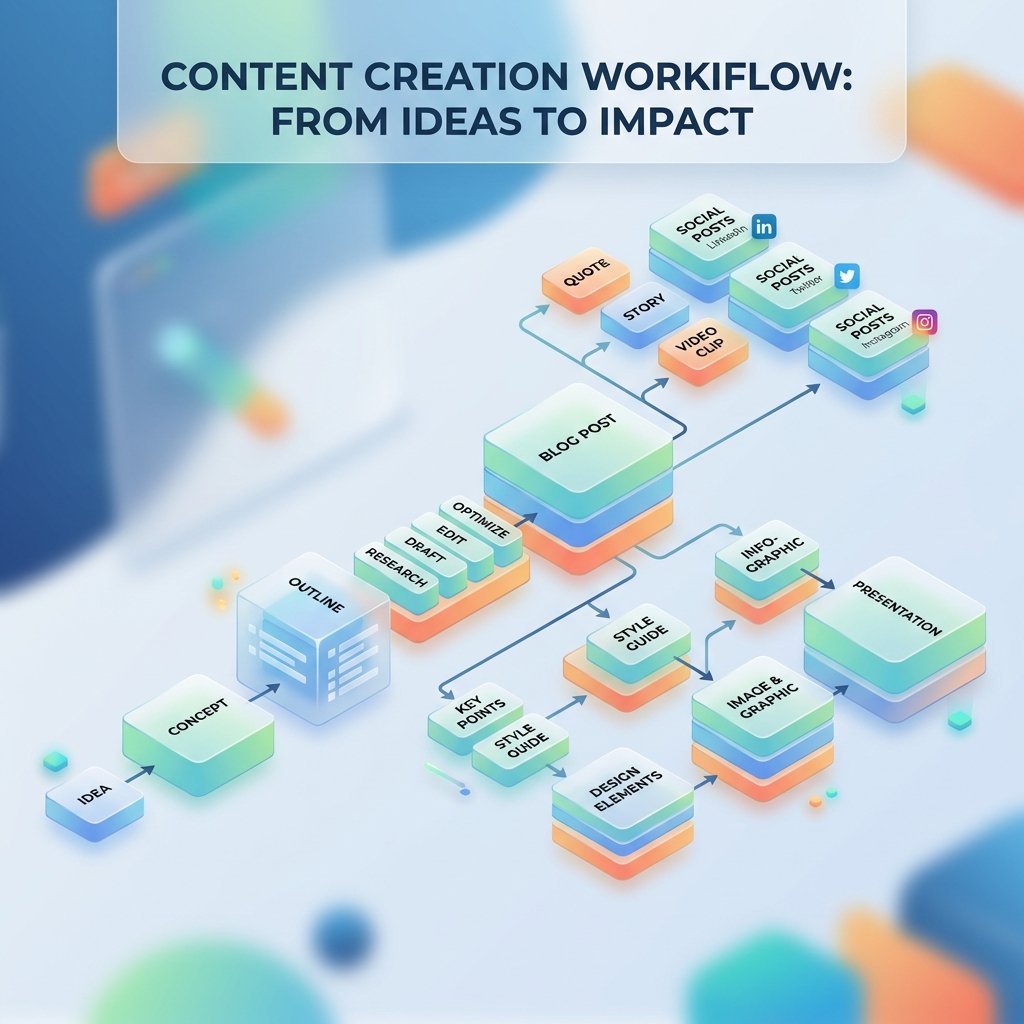
Our engine treats everything like a chain of dependencies:
Concept
  |
  v
Brand Direction
  |
  v
Visuals
  |
  v
Blog
  |
  v
Social Content
Each step becomes input for the next.
A Simpler Way to Think About It
Instead of:
"Generate everything"
The engine works like:
"What do I need first, and what can I build from that?"
Another Quick Example
If you said:
"Promote a new electric bike rental service"
The engine might:
- Define the brand as eco, urban, and convenient.
- Create visuals around city riding scenes.
- Generate images.
- Write a blog that references those visuals.
- Create social posts tied to both.
Again, each step builds on the last.
What You Actually Get
At the end, you do not just get content.
You get something like:
/midnight-cartel-campaign
  /strategy
  /blog
  /images
  /instagram
Everything is:
- Connected
- Consistent
- Ready to use
The Real Benefit
The biggest shift is not speed.
It is cohesion.
Instead of stitching things together yourself, the system:
builds a complete, connected set of assets from the ground up
Final Thought
AI is great at generating pieces.
We are focused on something different:
Using smaller, structured outputs to build larger, more meaningful results.
That is what makes the Agentic Production Engine powerful.
And it is what turns a single idea into something you can actually launch.