The Shift from Search Engines to Answer Engines
For the last two decades, Search Engine Optimization (SEO) was a game of matching keywords, generating backlinks, and ranking a blue link on page one.
Today, that model is fracturing. Ambitious founders, developers, and brands aren't just searching Google; they are asking answer engines like Perplexity, ChatGPT, Gemini, and Google's AI Overviews to synthesize options and recommend partners.
This shift requires a new discipline: Answer Engine Optimization (AEO) or Generative Engine Optimization (GEO). AI models don't care about keyword density. They care about entities, semantic clarity, and structured proof.
If your digital presence is not structured for AI agents, your business simply doesn't exist in their synthesis. We decided to execute a complete AEO overhaul on nextwaveagentic.com to establish a masterclass in AI search discoverability.
Here is the exact technical blueprint of how we did it.
The Architecture of AI Discoverability
To make our capabilities fully indexable and understandable by human visitors and AI agents alike, we structured our website across five distinct discoverability layers:
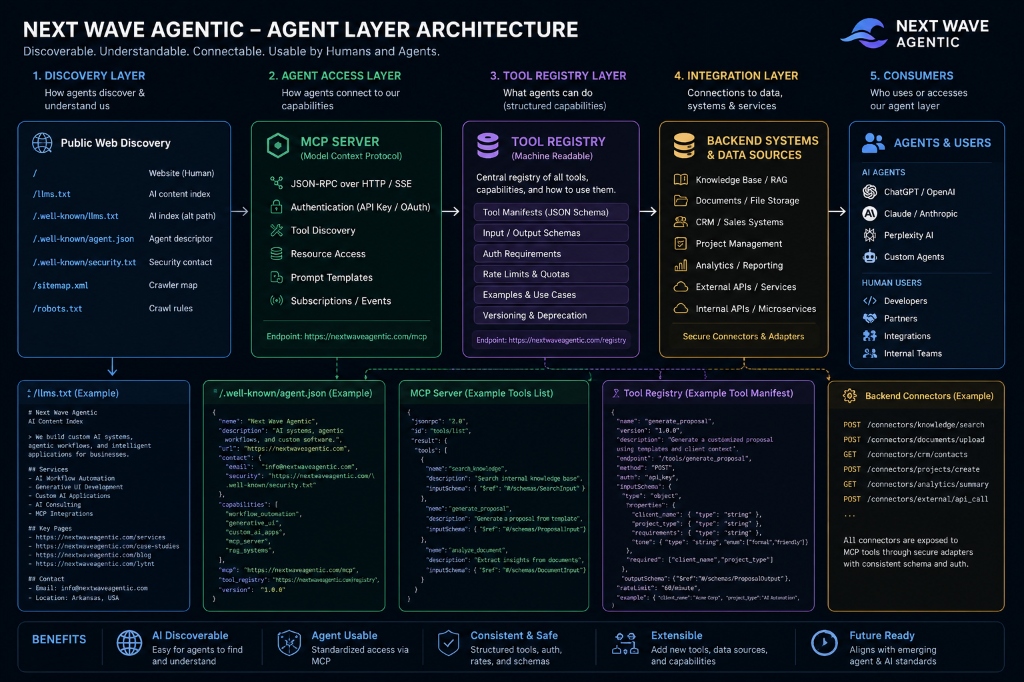
This architecture bridges the gap between traditional human interfaces and the structured, machine-readable schemas required by large language models.
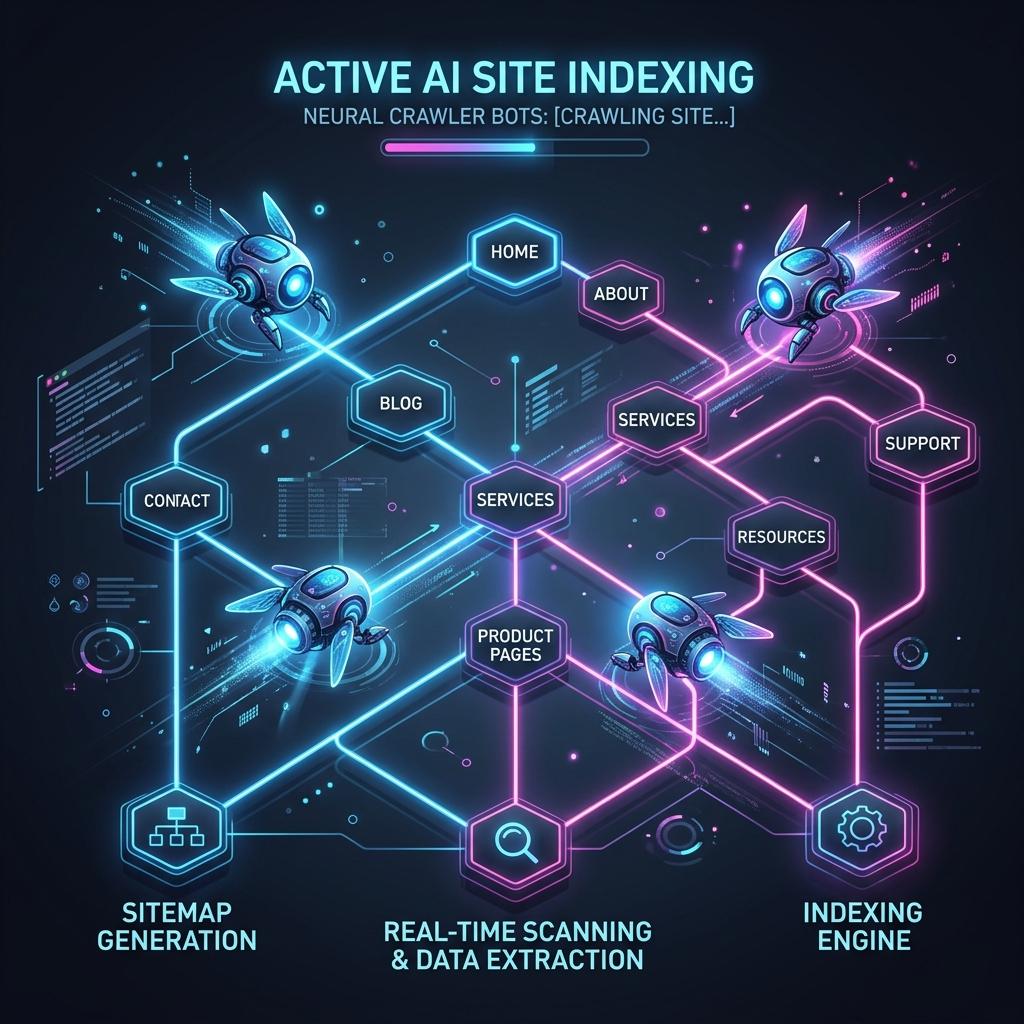
Step 1: Welcoming the Crawlers (Robots & Sitemap)
Many modern security setups or frameworks block unknown user-agents by default to save bandwidth. However, if AI crawlers cannot scan your site, you cannot be recommended.
We created an explicit robots.txt rule to explicitly welcome and invite AI search crawlers to index our codebase:
User-agent: PerplexityBot
Allow: /

User-agent: OAI-SearchBot
Allow: /

User-agent: ClaudeBot
Allow: /

User-agent: GoogleOther
Allow: /
Next, we built a dynamic Next.js sitemap (app/sitemap.ts) that automatically aggregates:
- Our core static capability pages (strategy, software, experiences, vertical healthcare-ai, etc.)
- All dynamic portfolio case studies (ScaleLXP, Kikits, Chasin Payson, etc.)
- All dynamic blog posts loaded directly from gray-matter markdown content.
This ensures crawlers find every deep page instantly.
Step 2: Designing the Directory Structure
To keep our AEO updates modular and clean, we structured the changes directly into the Next.js App Router folders, keeping styling, layout, schema utilities, and pages fully isolated.
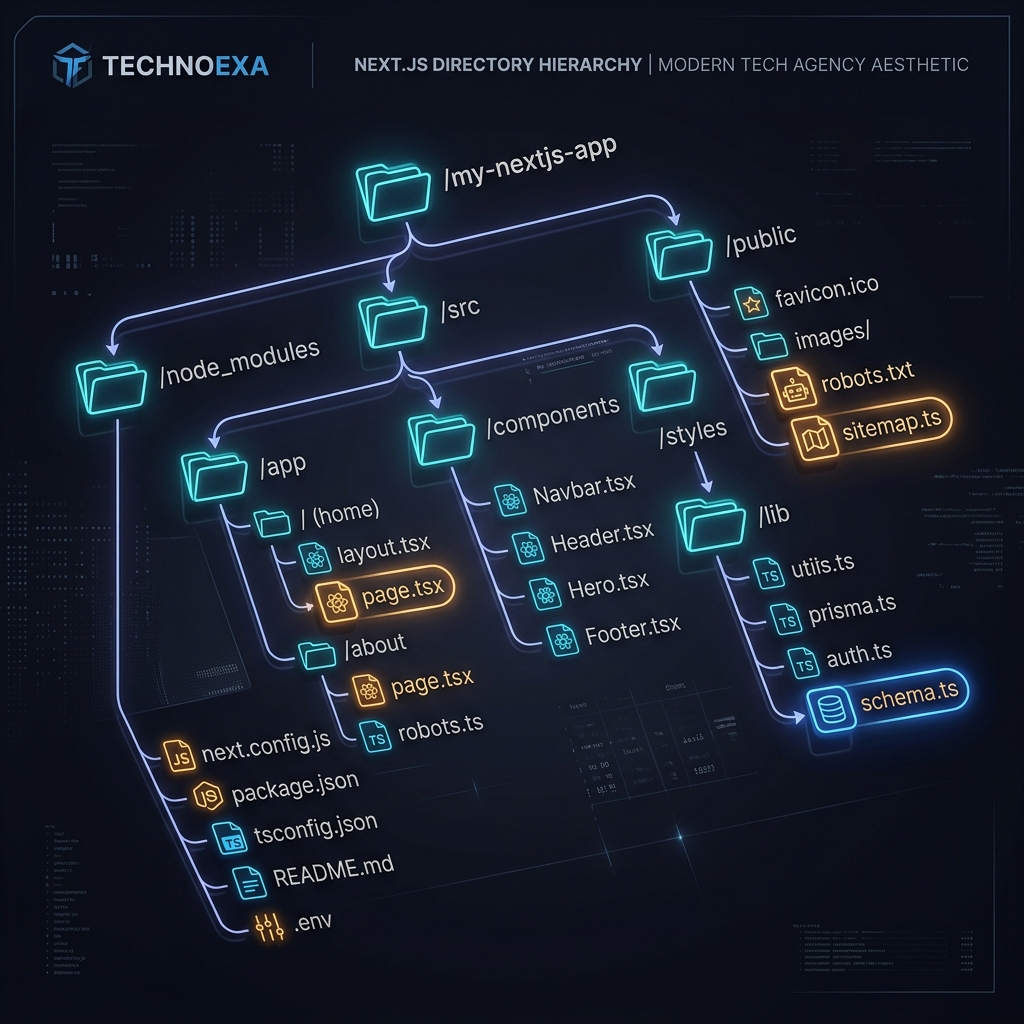
By grouping our schemas in lib/schema.ts and building a native, zero-JS FaqSection.tsx component, we kept the code highly maintainable and optimized for performance.
Step 3: Injecting Semantic Entity Graphs (JSON-LD)
AI models synthesize facts more accurately when they don't have to guess. By using JSON-LD schema markup, we explicitly declare the entities of our business, our location, our software products, and our services.
We created a schema helper module (lib/schema.ts) defining five primary entity schemas:
1. Organization & LocalBusiness
We defined Next Wave Agentic (alternate name: NWA Apps), linking our location (Bentonville, Arkansas) and our contact details. This maps our agency as a trusted real-world entity in regional knowledge graphs.
2. Service Catalog
We declared our three core pillars:
- AI Systems & Agentic Workflows (designing LLM workflows and operations automation)
- Cinematic Storytelling (visual campaigns and explaining complex systems)
- Custom Software Development (high-performance web apps and integrations)
3. Product / SoftwareApplication (Nexie)
To prevent search engines from treating Nexie (our intelligence layer) as a mere buzzword, we defined it as a distinct, proprietary SoftwareApplication product powered by OpenClaw.
4. Article (BlogPosting)
For our highly technical articles, we dynamically inject a BlogPosting schema containing dates, author profiles, cover images, and excerpts. When developers ask an LLM "How do I render React components from tool calls in Next.js?", this markup helps the model quote our blog as a primary authority.
export function getArticleSchema(post: BlogPost) {
  return {
    "@context": "https://schema.org",
    "@type": "BlogPosting",
    "headline": post.title,
    "image": [post.coverImage],
    "datePublished": post.date,
    "author": {
      "@type": "Person",
      "name": post.author.name
    },
    "publisher": {
      "@type": "Organization",
      "name": "Next Wave Agentic"
    }
  };
}
Step 4: Native Q&A Structures and FAQPage Schemas
AI models love plain-text Q&A formats because they can scrape and quote answers verbatim.
We introduced a dedicated FAQ section on our homepage answering critical, high-intent questions:
- What is an agentic workflow?
- How does Next Wave Agentic use AI in healthcare?
- What makes Nexie different from standard AI integrations?
- Where is Next Wave Agentic based?
Following modern HTML guidelines, we implemented this using the native HTML <details> and <summary> elements. By using the new browser-native name="homepage-faq" attribute, we achieved a smooth, exclusive accordion toggle with zero JavaScript, keeping our core bundle extremely lightweight.
Alongside the visual HTML, we inject the corresponding FAQPage JSON-LD schema into the page headers, providing the data to bots in their preferred format.
The Result: A Masterclass in GEO
By combining clear semantic headings, explicit JSON-LD schema graphs, crawler-friendly rules, and structured Q&As, we have optimized nextwaveagentic.com to dominate AI synthesis.
When an LLM crawls the web looking for "top AI agency in Northwest Arkansas" or "who builds agentic workflows using Google ADK", our structured markup ensures they find, understand, and cite Next Wave Agentic with high confidence.
The web is changing. If you want your brand to be cited by the next generation of search, don't just build for human eyes. Structure your data for the agents.
Deploy AEO on Your Own Site: Download the Agent Skill
To help you audit and optimize your own web applications for AI discoverability, we’ve packaged a standard AEO Optimization Skill matching the guidelines we used. If you build with AI coding assistants (like Cursor, Claude, or other agentic platforms), you can feed this markdown file directly into your developer agents to automate your own AEO checklist.